
The history inside a shipwreck
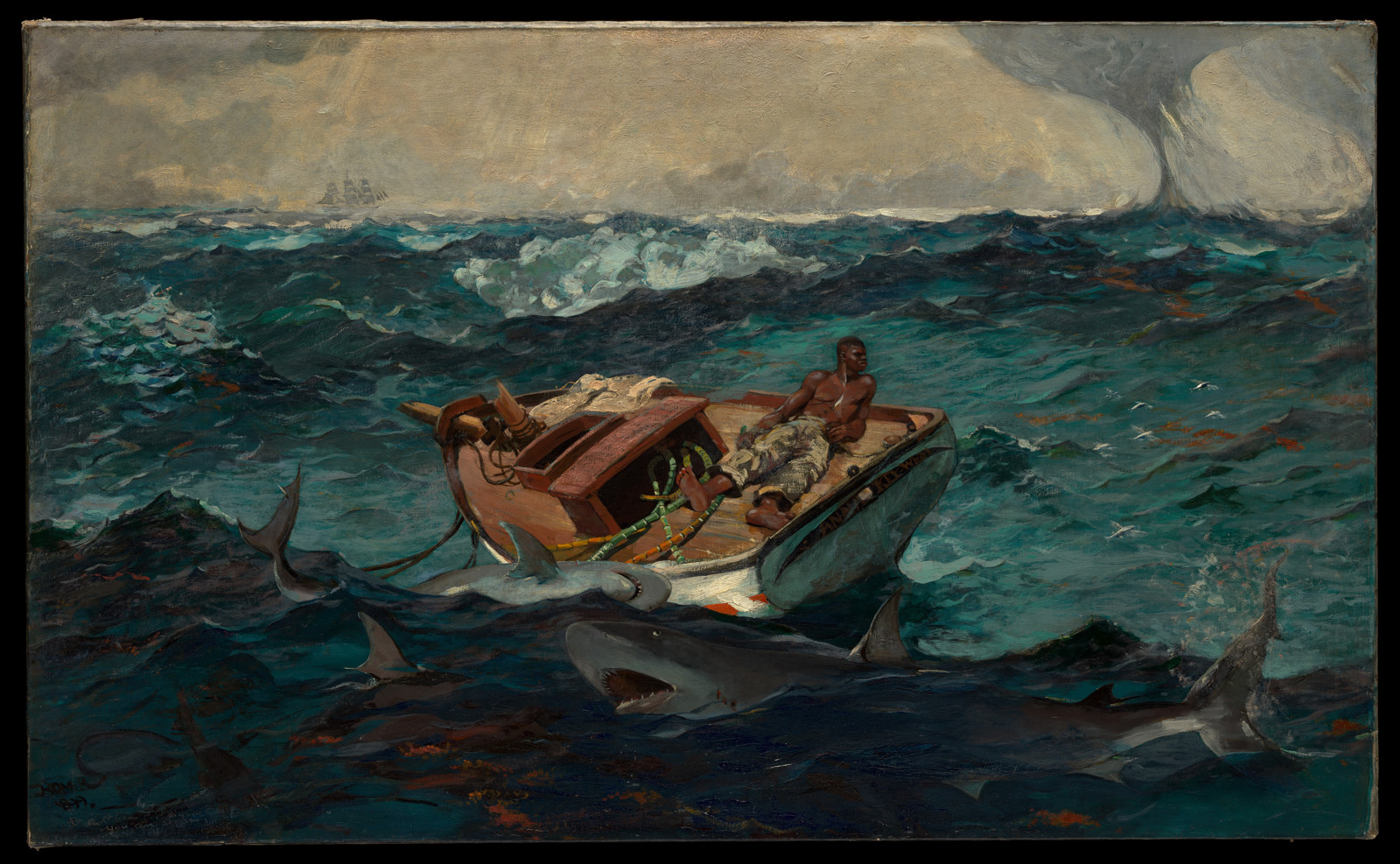
Winslow Homer spent decades painting Black lives after the Civil War and people struggling against the sea. In The Gulf Stream, painted in 1899 and reworked by 1906, those concerns meet in the ordeal of one man.
A boat becomes a trap
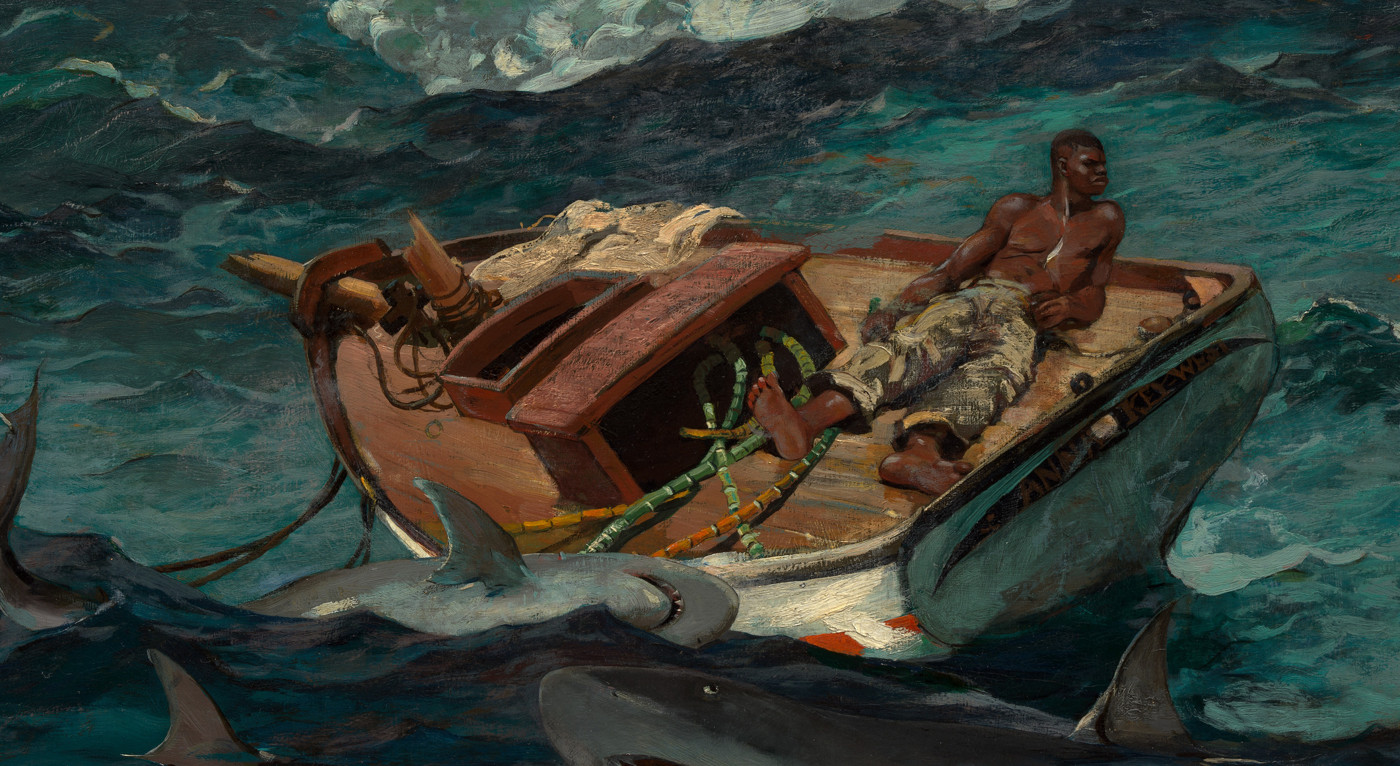
The broken mast leaves him unable to sail away. Sharks crowd the hull, making the water a deadly alternative to his fragile shelter. He can neither control his course nor safely leave. Against the predators’ agitation, his relatively still body conveys endurance: danger surrounds him without entirely defining how we see him.
Sugarcane carries slavery’s legacy
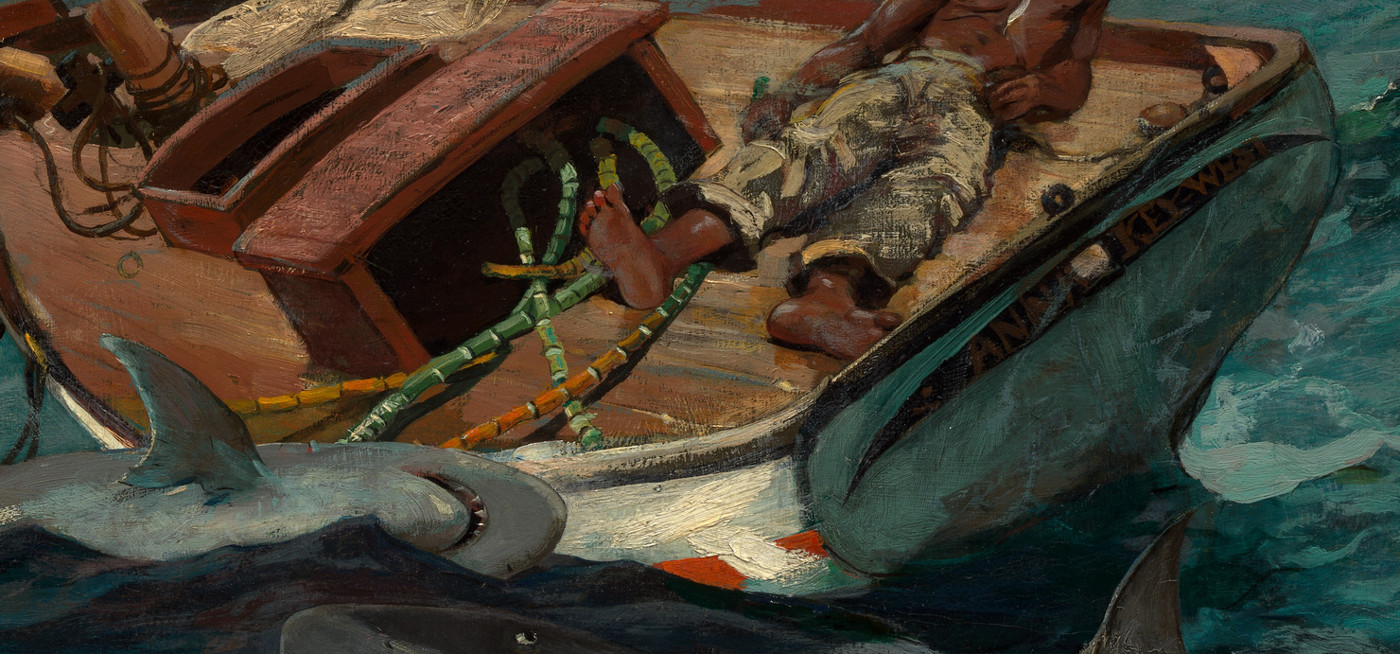
The stalks beside him are sugarcane, a crop whose Caribbean profits were built on enslaved African labor and overseas trade. Its placement beside a Black man connects the commodity with the people whose exploitation produced that wealth. His own history is unspecified, but this association allows his predicament to evoke Black vulnerability after emancipation, when racial violence and economic exploitation continued.
Help exists beyond his reach
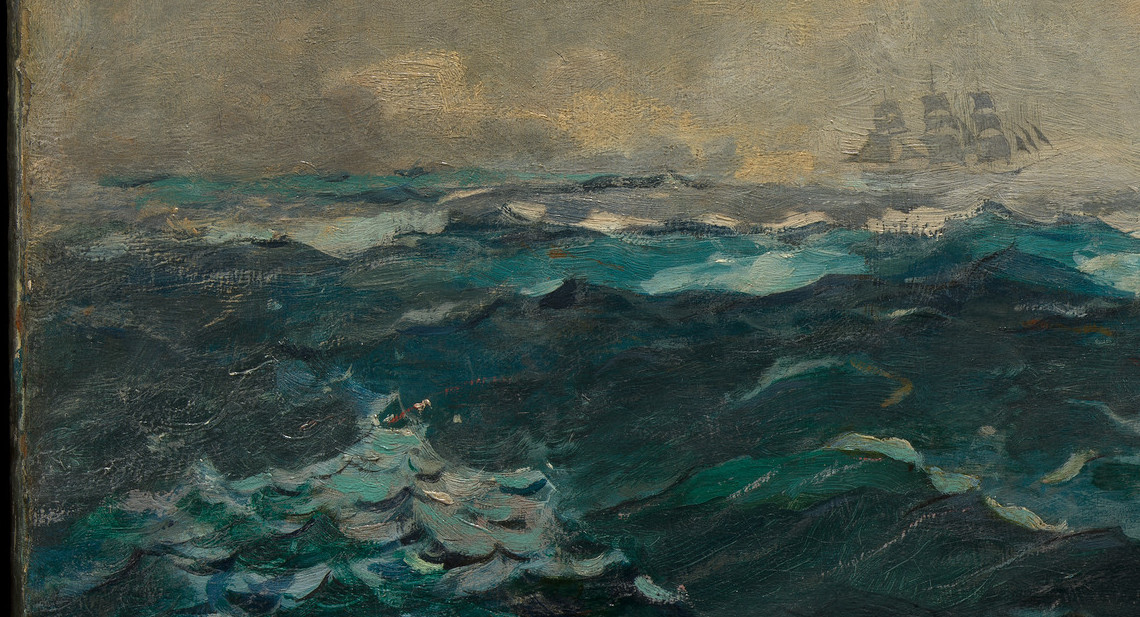
Homer added the ship on the left horizon during revisions, introducing a possible rescue. Its working sails contrast with the broken mast: the means of escape exist, but belong to another vessel. Almost lost in the distance, it offers hope without showing anyone coming to help. That separation makes his isolation more troubling than an entirely empty horizon would.
The title names the current connecting the Caribbean, America’s eastern coast and Europe, which also carried ships trading sugar and enslaved people. It joins the Atlantic settings of Homer’s career with his recurring concerns about survival and Black lives. Homer gives this man dignity while showing how little power he has over the forces determining his survival.
Artwork and details: The Metropolitan Museum of Art, Catharine Lorillard Wolfe Collection, Wolfe Fund, 1906 (06.1234). Public domain.
Back to Art Plunge